Dr Namirembe, inspiring lives and conserving the environment

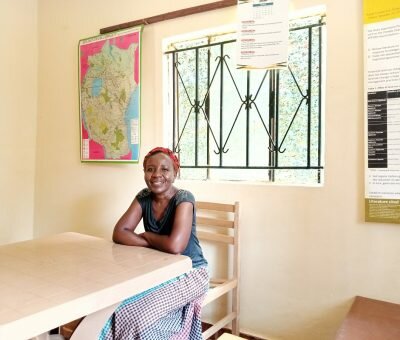
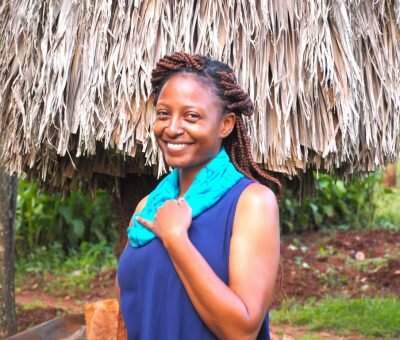
The adage, ‘where there is a will there is a way’ applies to Dr Sara Namirembe, a Christian and consultant on climate change adaptation. Although her mother only managed to study up to Primary Three and her father to JS2, this did not deter them from desiring better for their children.
“They desired and ensured that we get a decent upbringing and education. That is why I went through Kampala Parents’ School, Gayaza High School, and later Makerere University.
While her first choice had been medicine, Dr Namirembe soon grew to like forestry and respect the contribution of a healthy environment to human health. As such, her first degree was in forestry at Makerere University and on doing her post graduate studies, she majored in agroforestry because it brings the forests onto people’s farms and everyday lives. “As a scientist, I could contribute the knowledge needed on how to do this and make it work.”
However, while she graduated with an Upper Second-class degree, Dr Namirembe could not, for a long time find a job. It not only broke her heart but also that of her parents. “I wished someone could give me a chance to see what a great worker I could be. Unfortunately, all jobs asked for work experience, but there were no placements for interning so people like me could get the work experience.”
Career
With several people holding her hand, Dr Namirembe made commendable progress in her education and career journey. These include Mr Edward Kasole of Kampala Parents’ School; many teachers in Gayaza High School, but notably Ms. Anne Cutler; Dr John Kaboggoza who was Dean Faculty of Forestry and her supervisor during the first degree; her supervisors in her postgraduate studies; Dr Charles Ehrhart who now lives in New Zealand; Dr Meine van Noordwijk who was a lead scientist with the World Agroforestry Centre and many more.
The career journey includes being a lecturer in agroforestry at Makerere University, Acting Head of the Department of Community Forestry and Extension in the then Faculty of Forestry. “I have worked in various development organisations promoting involvement of people in caring for forests on farm and in protected areas. I served on the Board of Directors for the National Environment Management Authority (NEMA). I was also a scientist with the World Agroforestry Centre.”
Mentoring young people
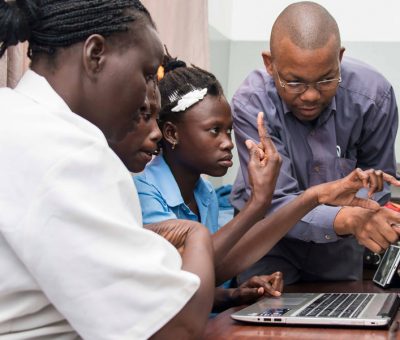
Owing to the experience of lack of experience leading to lack of employment, Dr Namirembe started Step-up Standard Limited. It is an organisation that uses mentorship through internship placements to build the capacity of young people who are trying to find work. This was birthed after she realised that there are many like her that need someone to assist them into the job market.
“I believe that Uganda is losing a lot of its potentially brilliant human resource through this gap between graduation and getting a job. In my career, I have travelled a lot and found young people presenting great pieces in international conferences. Uganda is underrepresented. However, I believe we have intelligent people here that could be skilled to benefit from such opportunities. The name Step-up is really to help such people get a footing on higher ground.”
Through the organisation, Dr Namirembe is inculcating values of establishing facts through research, environmental monitoring and professionalism. “I am also coordinating various projects conducting research in agroecology.”
On training and mentoring girls, she says it is crucial because they are very smart. “They need special attention because culturally, they do not seem to get enough encouragement to become scientists. They shy away so someone needs to believe in them and show them that they can.”
However, it has not been a bed of roses for this consultant whose dream is to get young people engaged in gathering information needed by our nation in planning. That is mainly in issues of environment and climate change, where she has gained a lot of knowledge.
“For instance, if the Ministry of Water and Environment needs to see if the wetlands of Mbarara are being encroached upon, rather than sending an officer from Kampala to Mbarara, they would, through Step up, partner with a school or a group of young people there. On the other hand, Step-Up would design a simple questionnaire that the young people would use to collect the information from affected persons as well as those in the wetlands. They would then write a report and then get an allowance coupled with experience and feel empowered because they have contributed to the development of the country. We would share the outcomes with the ministry, which would incur less costs yet get facts on how to plan better.”
However, she says, while she has talked to various entities in government to buy into the idea, not much has been done, save appreciating that it is a good idea.
Dr Namirembe has also tried NGOs because they also do research related work. However, she says their structures are designed in such a way that they have not put in place measures of engaging young people or those that deal with them. “However, they need the information.”
So, the idea is still sitting in her box as a dream although she believes that it has the capacity to change a lot. “If that can be addressed, I would be glad because while I am a consultant, I am willing to do it a low cost. I would love to use it as a proof of concept that it actually works.”
Achievements
Dr Namirembe has contributed to forest and environmental management in Uganda and the East African region. She has also published several papers on the same. The biggest of them all has been positively influencing lives of many young people, something she continues to do by virtue of finally establishing Step-up while she still has the energy and zeal to run it.




thepearluganda